
What could be more irritating than someone who claims to know everything about wine?
As you enjoy your merlot with pleasure, they may claim to detect notes of pepper, prune, or perhaps even pencil dust in their wine.
However, they probably have no idea what they're discussing, as scientists have disclosed.
Research indicates that new wine critics often exhibit strong self-assurance, which decreases once they begin gaining proper knowledge about wines.
Scientists examined wine critiques from an internet platform and tracked approximately 30,000 individuals based on every tasting comment they shared online between 2003 and 2012.
They monitored descriptive keywords and assessed certainty based on linguistic expressions.
Findings showed that with increased experience in consuming wine, individuals became less certain about their statements.
Initially confident about their taste descriptions, their wording gradually lost certainty, incorporating expressions such as "I'm unsure" or "It might be."
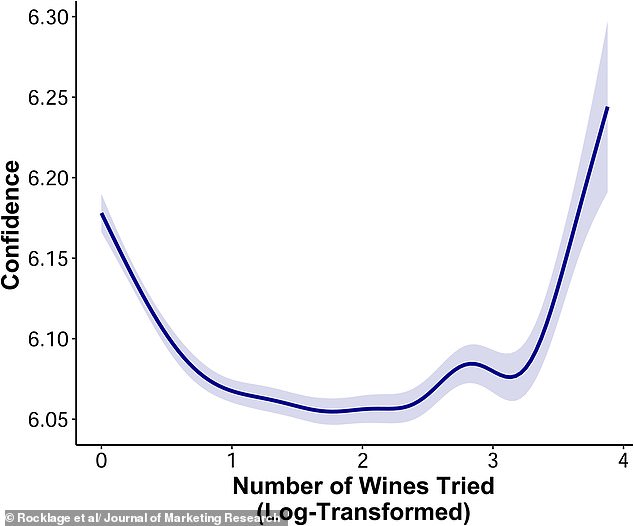
"They begin to understand, 'This is more complicated, more intricate than I had imagined,' " said author Matt Rocklage of Northeastern University in Boston.
There are many more details I require than I initially believed necessary. It is at this point that one begins to notice a decline in linguistic assurance.
In the end, that assurance "bounces back" and individuals began employing stronger expressions such as "I certainly detect this," he mentioned.
Therefore, if they aren't an officially recognized enthusiast, it's probable that your so-called "expert" friend is exposing your deception.
The research appeared in the Journal of Marketing Research .
The researchers stated, 'There exists an inverted-U shaped connection between experience and self-assurance.'
Although early encounters may lower self-assurance, over time, as more experience is gained, confidence recovers.
The group mentioned that they noticed a similar U-shaped pattern in consumer confidence for both beer and beauty products.
Earlier This year, an expert stated that it is advisable to consume just one glass of wine once every twelve months.
The human body can only safely ingest one "large" glass of wine annually due to its high level of toxicity, as stated by Professor David Nutt, an esteemed drug scientist from Imperial College. London .
He says that if alcohol If it were created today, it would not meet current food safety regulations due to its detrimental effects on human health.
Research into the toxicity of alcohol—how harmful substances affect living beings—indicates that the "maximum suggested intake" annually amounts to only one big glass of wine, as stated by an authority in the field.
Read more- Is it possible for wine tasting to actually make you feel lightheaded? Learn about the leading critic's intriguing techniques for maintaining clarity while evaluating 1,000 wines annually.
- Is your preferred beverage riskier than you realize? Learn why top specialists caution that even a single serving per year could be excessive!
- Does drinking wine carry more dangers than you realize? Bryan Johnson's revealing perspectives on its potential link to cancer could cause you to rethink your next bottle.
- What makes specialists warn about drinking wine, even though it has a long-standing place in cultural traditions?
- Does your evening glass contain concealed sweeteners? Specialists share insights on making better wine selections for a more healthful drink!
Posting Komentar